This is a group-ready pack. 7 questions, medium difficulty, competitive tone — short enough for a Discord channel and loud enough for a party.
Everyone plays on their own device — no app, no signup, no one typing their name into a second screen. You share the link, they tap it, the gameshow starts. 20-second timers, instant reveals, final scoreboard. About 3 minutes for the full run.
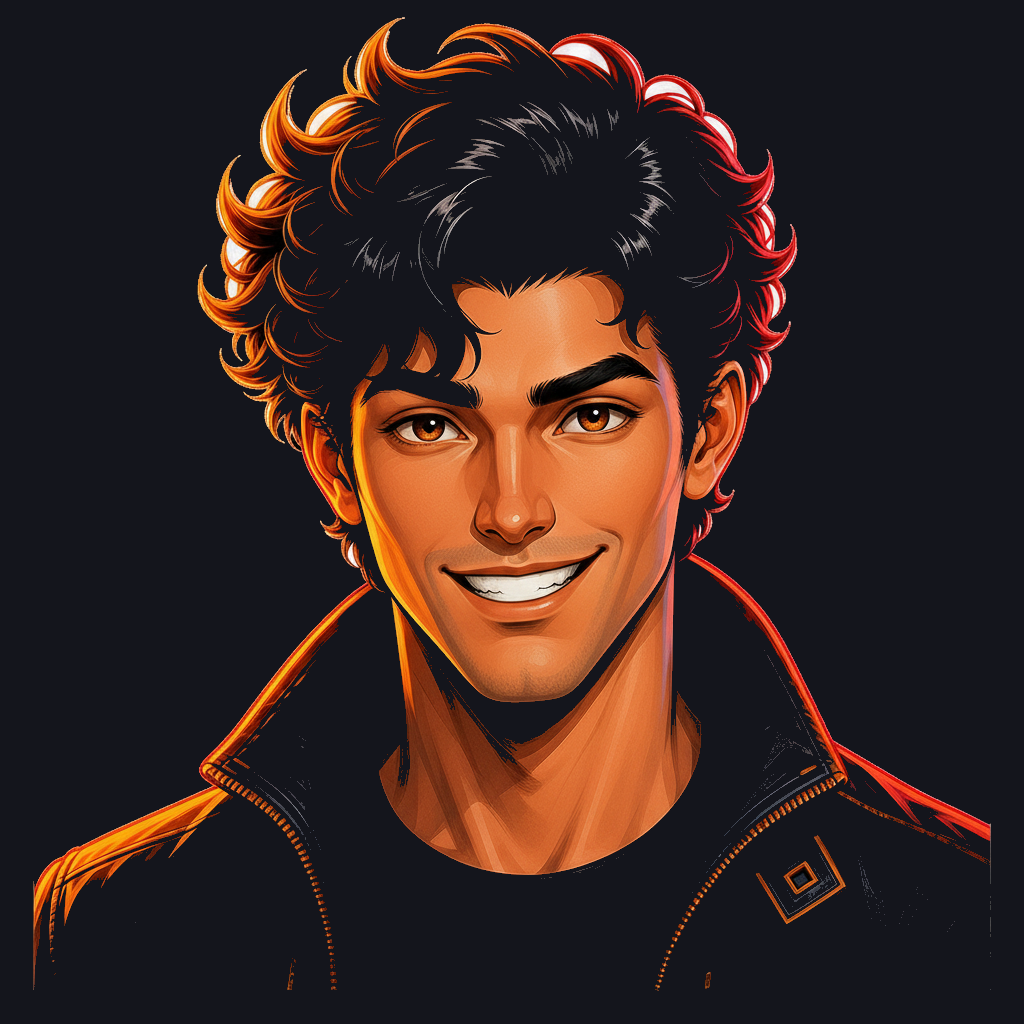
What makes the pack feel live is Blaze on the mic. Blaze treats every round like a championship final — intense, loud, competitive. Smart Host-enabled packs add per-answer commentary — worth replaying the pack just to hear how the reactions change.
When the pack ends, there's a one-tap "challenge a friend" share that carries your score into the new link. Good for Discord servers, group chats, fan communities, and the back half of any party where you need something to do. Pack language: English.
"VC Signal or Startup Theater?" is built to fit a single sitting — around 3 minutes for 7 questions, including the host's reactions and answer reveals.
No. Anyone with the link can play "VC Signal or Startup Theater?" instantly on any device — desktop, phone, or tablet. There's no signup wall, no app download, and no email required. Just tap the link and play.
This pack is voiced by Blaze — a fully AI-generated host with a distinct personality and accent. Every question in "VC Signal or Startup Theater?" runs through Blaze's voice, and answer reveals come with in-character commentary. This pack runs with Smart Host on — Blaze's reactions are generated per answer, so wrong answers, right answers, and timeouts each get a different take. Learn more about Blaze at /hosts/blaze.
Difficulty on "VC Signal or Startup Theater?" is medium — a mid-level challenge — expect questions that reward genuine familiarity with the topic but don't require deep expertise. The competitive tone shapes how the host reacts, but the question difficulty itself is independent of tone.
"VC Signal or Startup Theater?" focuses on A founder and VC networking challenge using concrete startup examples and concepts from YC, Sequoia, a16z, First Round, Airbnb, Stripe, Figma, Notion, OpenAI, founder-market fit, traction quality, fundraising myths, customer discovery, moats, and distribution.. You'll see questions across Founder-Market Fit Importance, Startup Founding Stories, Early Stage Startup Challenges, Fundraising Myths Debunked, Customer Discovery Process, and Startup Moats and Distribution. We intentionally don't publish the question list — half the fun is not knowing what's next.
"VC Signal or Startup Theater?" is published in English. Trivana itself runs in ten languages — English, Spanish, Hindi, French, German, Portuguese, Japanese, Arabic, Korean, and Chinese — and a Creator Pro subscription lets you translate the pack on the fly, with the host voicing the new language natively.
About this game
VC Signal or Startup Theater? is a 7-question AI-hosted trivia round about A founder and VC networking challenge using concrete startup examples and concepts from YC, Sequoia, a16z, First Round, Airbnb, Stripe, Figma, Notion, OpenAI, founder-market fit, traction quality, fundraising myths, customer discovery, moats, and distribution.. The round is balanced for mixed audiences — challenging enough to keep regulars engaged without losing newcomers, and the host carries it with a tone that is competitive and score-driven — the host leans into streaks, misses, and the beat-my-score challenge. Most players finish in about 3 minutes on phone or laptop — no signup, no app install, just a shareable link that opens straight into the game.
Every question is generated by AI and checked before publication. The pack passed Trivana's quality scoring before publication; when source grounding is available, verified facts are shown below. The host voice (delivered by Blaze) reads each question aloud with timing, reacts to your answer in real time, and produces a shareable scorecard when the round ends. Trivana is built for the moment when a static quiz form falls short of the gameshow energy the topic deserves.
Your host: Blaze
Competitive edge
Blaze leans into stakes. His delivery is punchy, confident, and a little cocky — the host who celebrates a winning streak, calls out a close miss, and keeps the tension high through every round. He's the default host for 90s pop-culture showdowns and sports-heavy packs.
Creators pick Blaze when they want their trivia to feel like a bracket, not a party. That makes him a strong fit for community leaderboards, Discord seasons, sports-fandom packs, and formats where competition itself is the draw.
What this round covers
The 7 questions in this round are distributed across the following sub-topics within A founder and VC networking challenge using concrete startup examples and concepts from YC, Sequoia, a16z, First Round, Airbnb, Stripe, Figma, Notion, OpenAI, founder-market fit, traction quality, fundraising myths, customer discovery, moats, and distribution.. Each sub-topic gets at least one question; some get multiple depending on the depth available in the source material:
Founder-Market Fit Importance
Startup Founding Stories
Early Stage Startup Challenges
Fundraising Myths Debunked
Customer Discovery Process
Startup Moats and Distribution
Venture Capital Investment Strategies
Show all 7 questions, answers, and explanations — full spoilers, only expand after playing
Heads up: opening this section reveals every question, every option, and the correct answer for this round. If you came here to play, scroll up and hit Play first.
Question 1: Which concept describes the alignment between a founder's expertise, passion, and the market they are targeting?
Product-Market Fit
Vision-Market Alignment
Founder-Market Fit ✓ correct
Team-Market Synergy
Explanation: Founder-Market Fit refers to the crucial alignment between a founder's skills, experience, and passion, and the specific needs and characteristics of their target market.
Question 2: Airbnb's founders initially struggled to pay rent. What unconventional method did they use to generate income and validate their idea?
Rented out air mattresses in their living room ✓ correct
Offered freelance web development services
Sold custom-designed t-shirts
Operated a pop-up coffee shop
Explanation: In 2007, Brian Chesky and Joe Gebbia, struggling with rent, decided to rent out air mattresses in their San Francisco loft during a design conference when hotels were fully booked. This became the genesis of Airbnb.
Question 3: Stripe, a company co-founded by Patrick and John Collison, primarily revolutionized which aspect of online business?
Customer relationship management
Online payment processing ✓ correct
Social media marketing
Cloud computing infrastructure
Explanation: Stripe was founded in 2010 by the Collison brothers to simplify online payment processing, transforming a multi-week process into minutes with just a few lines of code.
Question 4: Notion, the all-in-one workspace, faced near bankruptcy. What drastic step did its founders take to rebuild the product?
Pivoted to a completely different industry
Acquired a competitor to integrate their tech
Relocated to Kyoto, Japan, to rebuild from scratch ✓ correct
Raised a large emergency seed round from YC
Explanation: In 2015, facing financial difficulties, Notion's founders, Ivan Zhao and Simon Last, laid off employees and moved to Kyoto, Japan, to rebuild the product's backend from the ground up.
Question 5: Which of these is a common fundraising myth that founders often believe?
You need a perfect product before seeking funding ✓ correct
Investors prioritize market potential over team experience
Fundraising is a continuous process, not a one-time event
Raising less money is always better for equity
Explanation: A common fundraising myth is that a fully developed product is required before seeking funding. In reality, investors often fund companies with a Minimum Viable Product (MVP) or even just a strong idea and team.
Question 6: What is the primary goal of 'customer discovery' in the early stages of a startup?
To validate assumptions about customer problems and needs ✓ correct
To build a large social media following
To finalize product features before launch
To secure initial sales and revenue
Explanation: Customer discovery is the initial and iterative process of understanding customers' situations, needs, and pain points to validate business ideas and ensure the startup is solving a real problem.
Question 7: Which of the following is NOT typically considered an 'owned' distribution channel for a startup?
Company blog
PR coverage ✓ correct
Email list
Organic social media presence
Explanation: Owned channels are those a company controls entirely, like its blog, email list, and social media presence. PR coverage is an 'earned' channel, as it's not directly controlled.